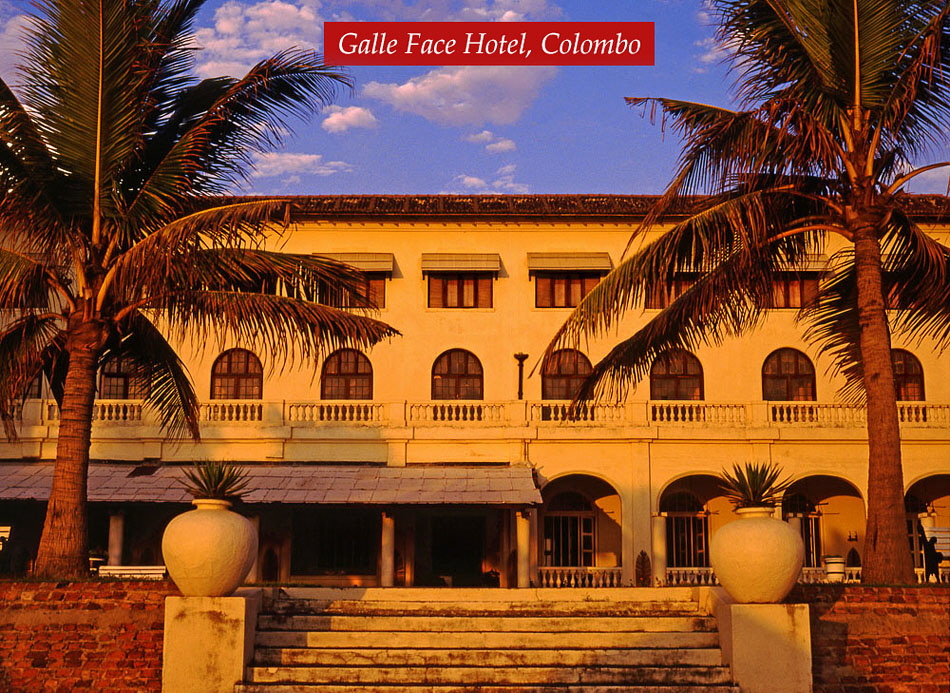
Lingering memories of a legendary hotel
I was around twelve years old when I first visited the Galle Face Hotel. At the elegant ballroom, I was sitting there with my parents and a couple of hundred others attending a banquet. It was the place for couples to have their wedding reception, to be seen, and even pictured in the Sunday Observer, depending on how high up in society you were. The trend continues today where opulence and affluence displayed by the Sri Lankan elite and the hotel is ever so evident.
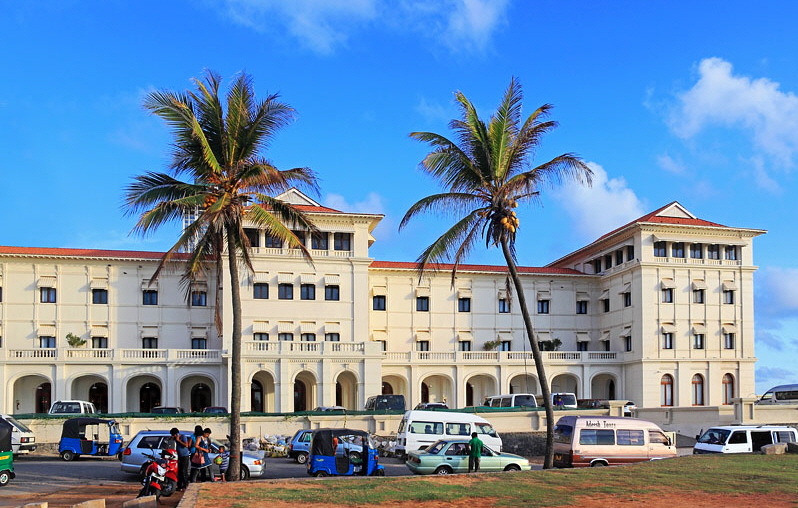
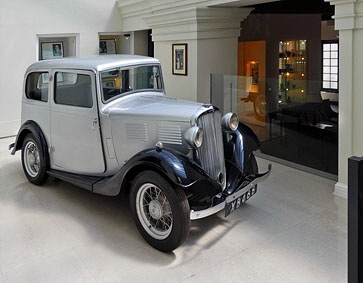
Now living several decades in the UK, each time I visit Sri Lanka I am drawn to this hotel even for a brief visit. And on one such occasion, I had the pleasure of staying there for a few days. Even on my last visit in 2019, I was pleased to see nothing much had changed. Over the years refurbishment had taken place, and facilities like a spa, gym, and business centre had been added, without any loss to the hotel’s ambience and heritage. And visiting its small museum and library, containing the 1935 Standard Nine car once owned by Prince Philip, brought back memories of this hotel’s past elegance that continues today.
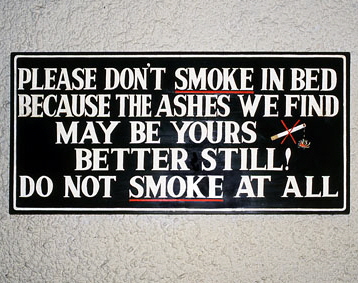
“Please don’t smoke in bed because the ashes we find may be yours”.
Not the sort of message you would expect to find outside your hotel room. But then the Galle Face Hotel is no ordinary hotel.
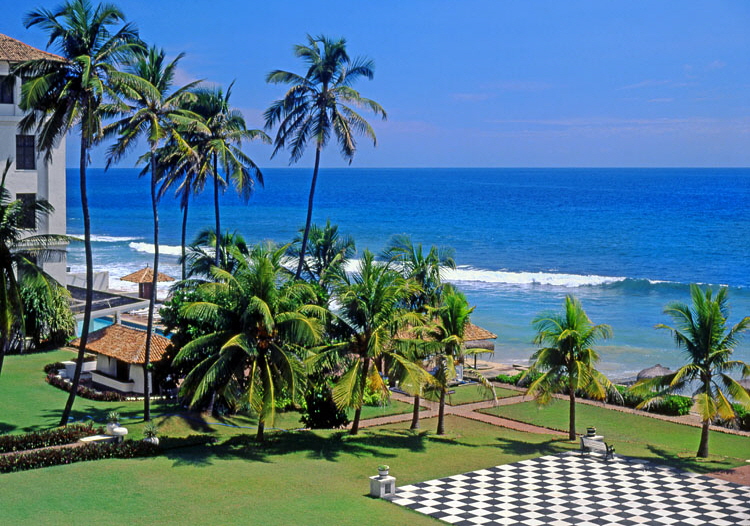
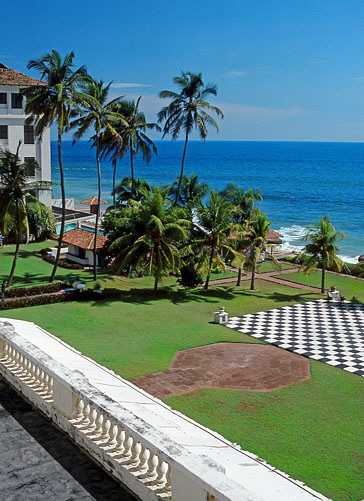
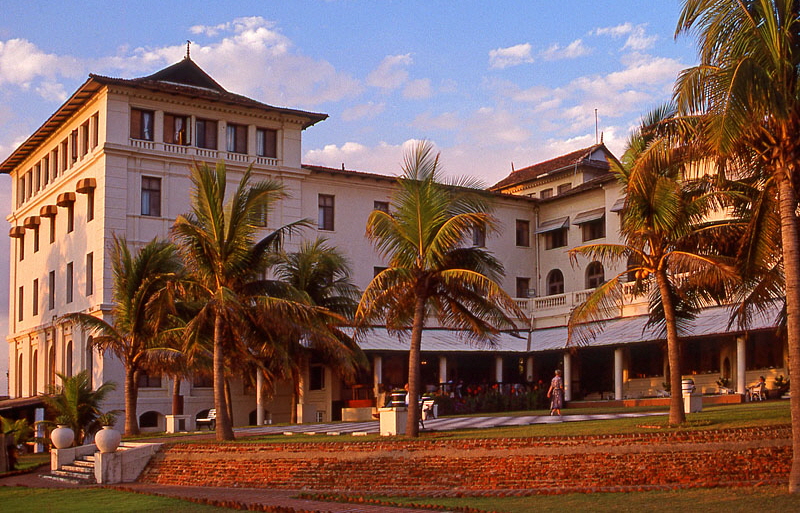
Opened in 1864, it prides itself not only on being the oldest hotel in Sri Lanka, but also one of the finest hotels in the world. Occupying an unrivalled position on the seafront, the imposing colonial-style building is Colombo’s best loved landmark. Its romantic castle-like exterior could be mistaken for an English stately home were it not for the coconut palms, the deep blue Sri Lankan sky, and the sound of the Indian Ocean, all of which confirm its unmistakably tropical setting.
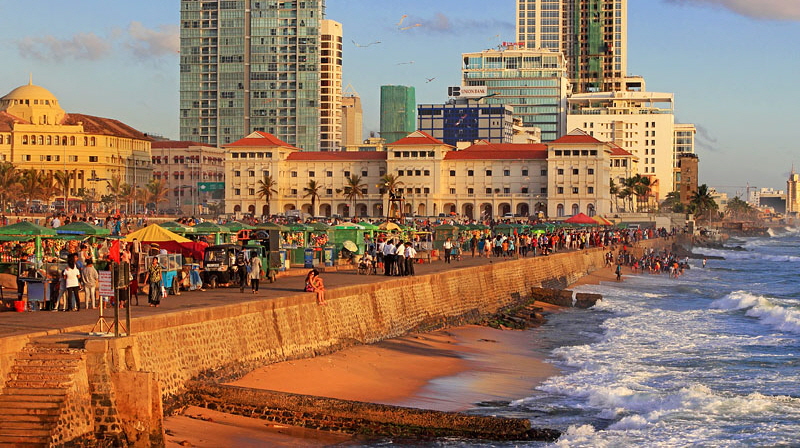
Galle Face Green
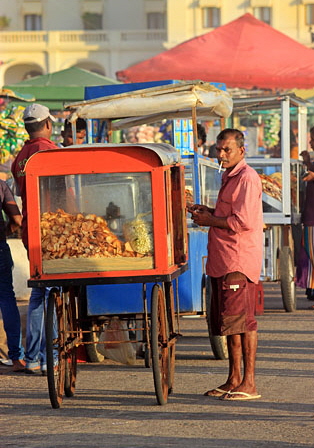
Snacks seller
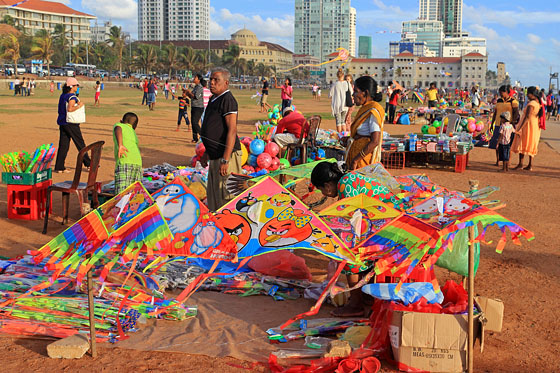
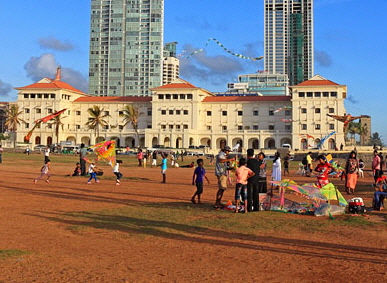
Galle Face Green, kite seller
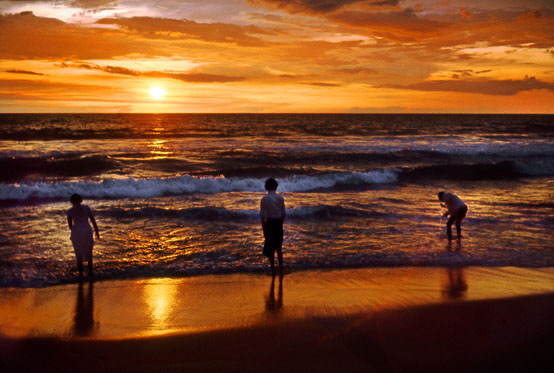
Outside on the Galle Face Green, the temperature is a sticky 85F. Hawkers sell pineapples, mangoes, spicy snacks, and soft drinks, while kite-sellers and kite flyers are happy to brave the fierce afternoon sun. Sunday evenings brings out the crowds to enjoy the sea breeze, stroll along the promenade, paddle in the sea, and watch the sun goes down.
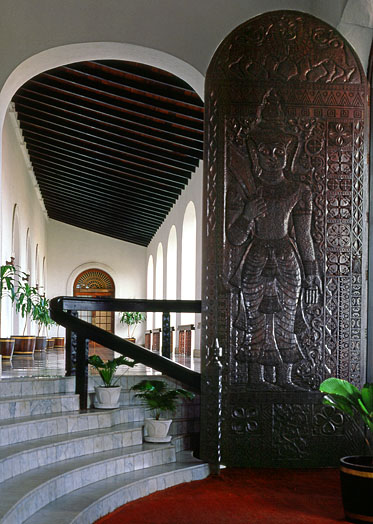
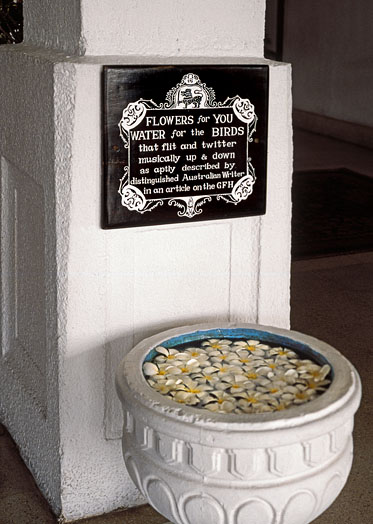
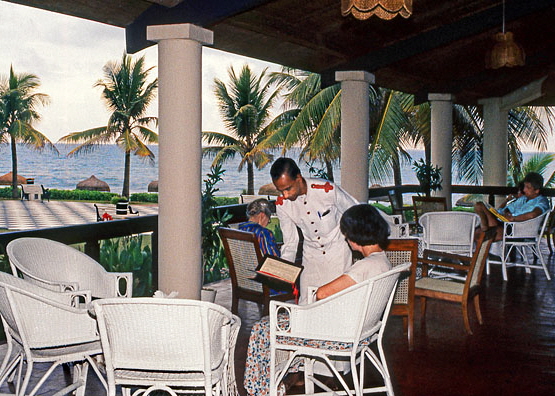
Climbing the marble steps to the hotel’s impressive entrance hall, you immediately enter another world. Sparrows (actively encouraged by two birdbaths inside the lobby) flutter around stone pillars. Barefoot waiters, immaculate in spotless white sarongs and white epauletted jackets, glide about their work in silent, unobtrusive efficiency. Overhead, whirring ceiling fans stir the heavy air.
In its heyday, when the hotel was popular with tea planters, some became permanent residents. A plaque in the lobby reminds visitors that the Galle Face was established four years before the first railway engine was introduced in Sri Lanka, 39 years before the Wright brothers flew the first plane, and 40 years before Raffles Hotel in Singapore was opened.
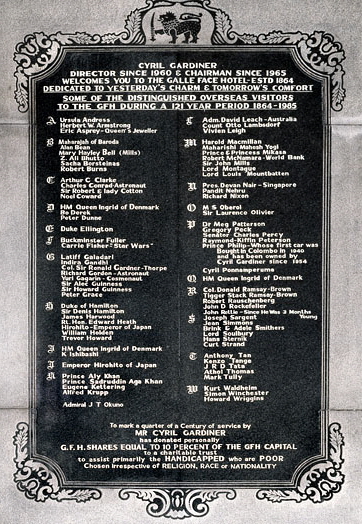
Another lists some of the many personalities and dignitaries who have visited the hotel throughout its 155-year old history. Among those listed are such unlikely bedfellows as Noel Coward, Arthur C Clarke, Richard Nixon, Che Guevera, Admiral Louis Mountbatten, Yuri Gargarin, Emperor Hirohito of Japan, Mahatma Gandhi, and Prince Philip to name a few. Numerous world celebrities, writers, movie stars, musicians, and singers have all enjoyed the hotel’s hospitality. Original photos of some who stayed are also on display at the museum.
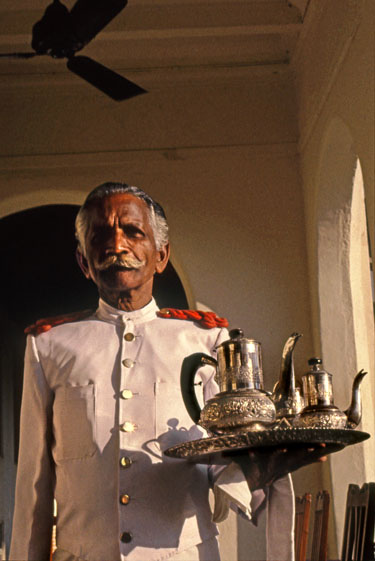
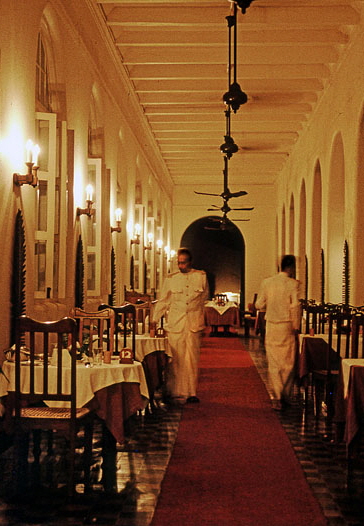
Then, as now, the emphasis was on personal service with an army of workers employed to polish the floor with the aid of polish, cloths and their feet. Cleaning methods may have changed a little since then, but with domestic staff (including butler on each floor) outnumbering residents by more than five to one, guest comfort is no less a priority. Many of the staff have been with the hotel for generations. They display loyalty and professionalism which goes far beyond that of merely doing a job. On one of my visits, I had a pleasant chat with Kuttam, an 80-year old waiter with over 50 years of service who told me, ”I hope to work for many more years - Galle Face is like a home to me”.
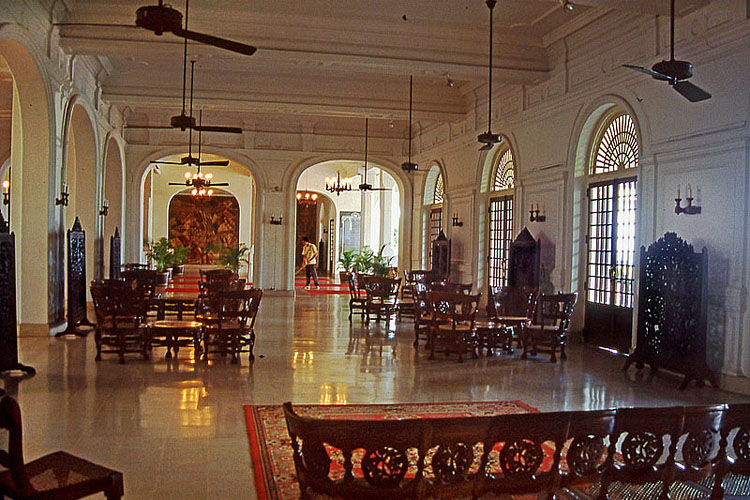
In the mid 90’s my conversation with then chairman Cyril Gardiner, who looked after the GFH for more than 30 years confirmed his dedication to “yesterday’s charm and tomorrow’s comfort”. At the same time, he stamped his unique character on the hotel. His no-nonsense messages were displayed on hand-painted wooden boards throughout the building. “It’s good for you, please walk down, two flights only” and “The Galle Face admires your decision not to smoke” (so much so that non-smokers are given a US$5-a-day discount on their room rate). When the present chairman Sanjeev Gardiner son of Cyril Gardiner (who passed away in 1997) took over, he too took on the task of ensuring the art of gracious living continued.
Emperor Suite
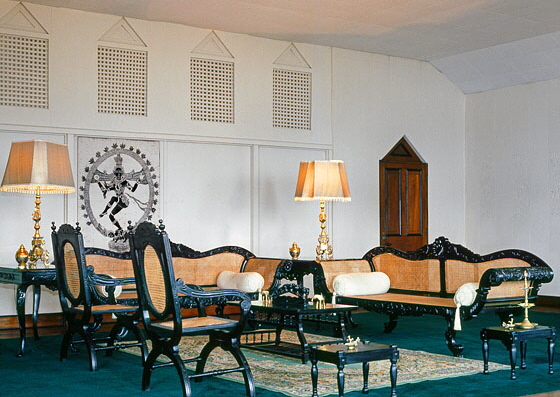
The pride of the hotel is the massive King Emperor Suite. Elegantly decorated with deep emerald carpets and curtains, it is furnished throughout with antique and reproduction ebony. Next in order of grandeur are the four ‘Royal’ suites - ‘Scandinavian’, Commonwealth, ‘Thai’ and ‘Danish’ in honour of the queen of Denmark who once stayed there. Then there are the ‘Jumbo’ rooms - so-called because they are large enough to keep an elephant in. Many of the names may have now changed, but the elaborate decor still remains.
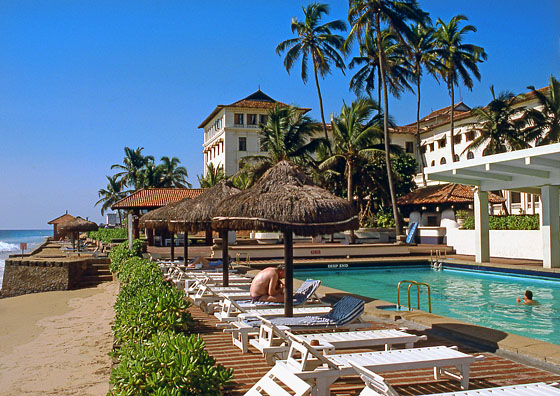
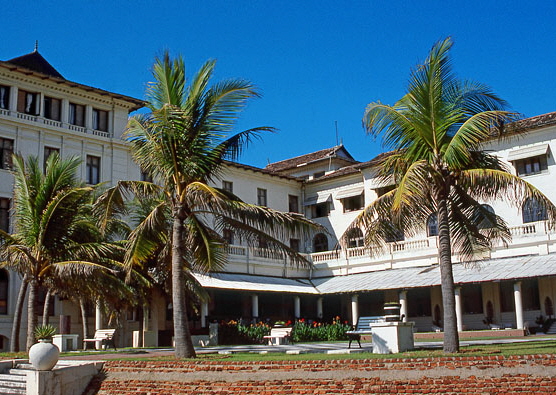
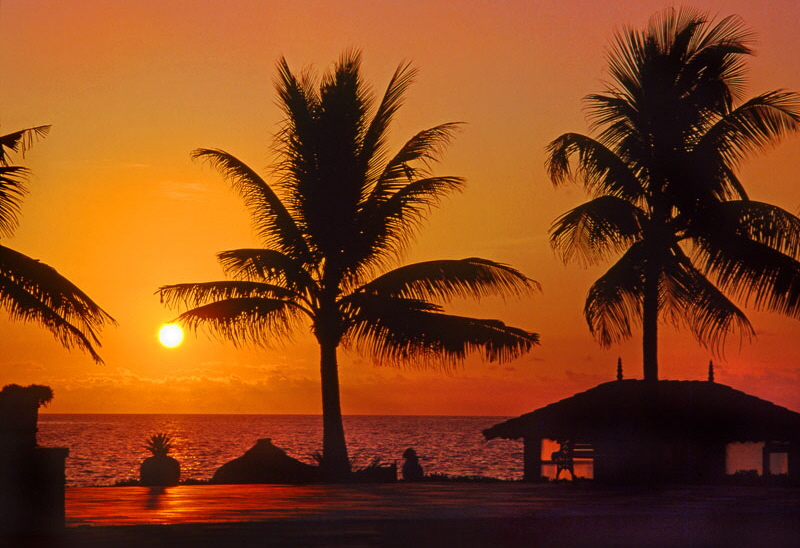
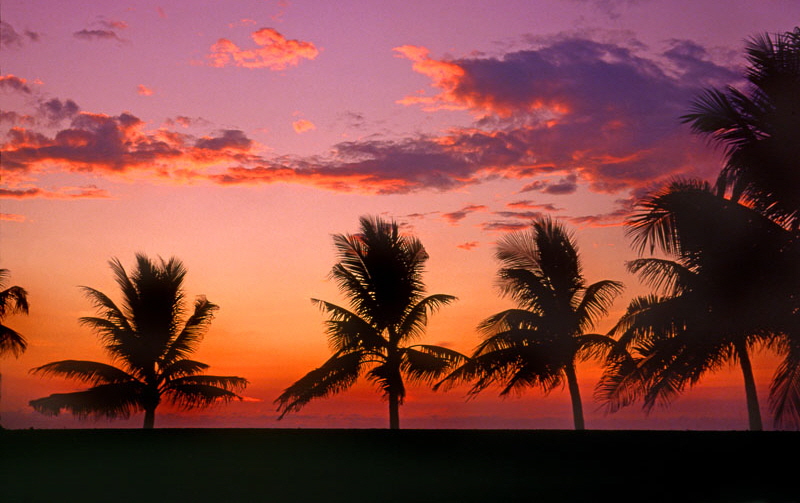
Outside you can have a dip in the king-size swimming pool or take afternoon tea on the terrace overlooking the Indian Ocean. Then sip a cocktail from The Chequered Bar where Queen Elizabeth II once hosted a celebration during the Second World War. It was here also where the first case of Pimms No 1 to be exported abroad was enjoyed. Later after a spectacular sunset view, have dinner at the intimate veranda restaurant, cooled by the night breeze and entertained by the music of the sea. The food, either local or European is served in generous portions by staff who instinctively know just how long to wait between courses and when to offer you a second serving.
Despite its conservative appearance, the Galle Face has had its fair share of excitement over the years. There was a time when, during the second world war, a pilot crash-landed his plane on the lawn and was invited to stay for tea. More recently the hotel formed the backdrop for a Japanese television ad and its ballroom became a film set in a movie about President Marcos of the Philippines.
The GFH is also listed in the book ‘1000 Places to See Before You Die’, and has received numerous awards throughout its history. In 2012 it also became the first hotel to be featured on a Sri Lankan postage stamp.
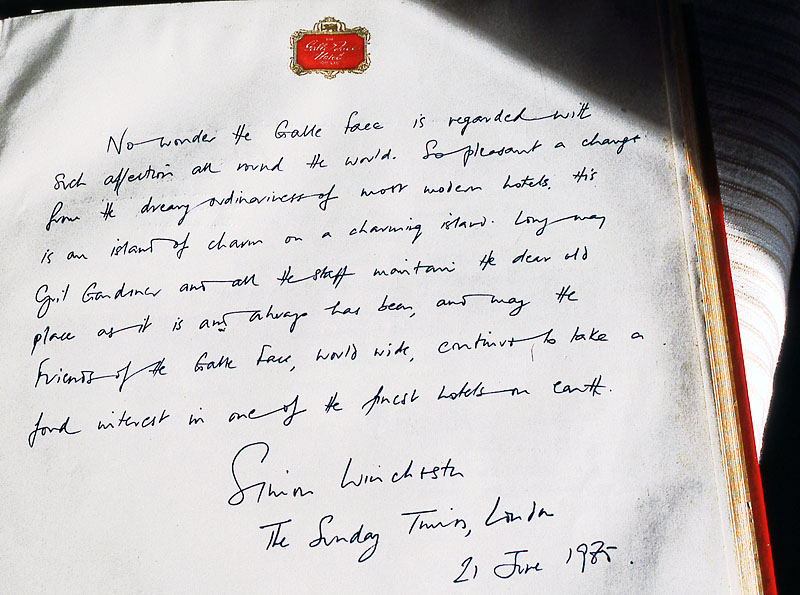
Anyone still needing to be convinced of the hotel’s charms has only to glance at the Visitor’s Book and read the comments of departing guests. “The Galle Face is a home away from home. There are hotels and hotels, but the Galle Face is unique”. British journalist Simon Winchester summed it up with his entry “No wonder the Galle Face is regarded with such affection all around the world. So pleasant a change from the dreary ordinariness of most modern hotels...long may live Cyril Gardiner and all the staff maintain the dear old place as it is and always has been and the friends of the Galle Face worldwide continue to take a fond interest in one of the finest hotels on earth”.
© COPYRIGHT notice. The images on this site are for viewing only.
To purchase any, for personal or commercial use, please contact us at jaytravelphotos@aol.com